viernes, 16 de diciembre de 1988

El Pordiosero - The Beggar

(Trabajadores en la Plaza Colón marchando hacia la Gobernación reclamado mejoras en sus remuneraciones, fueron masacrados por el Gobierno de Camilo Ponce y sus cadáveres lanzados al río Guayas por cientos y sobre quienes Joaquín Gallegos Lara en 1946 escribió la novela "Cruces sobre el Agua" - Workers in the Plaza Colón marching towards the Government claimed improvements in their salaries, they were massacred by the Government of Camilo Ponce and their bodies thrown into the Guayas River by hundreds and on whom Joaquín Gallegos Lara in 1946 wrote the novel "Crosses on Water", Guayaquil noviembre 15 de 1922)

De las desventuras más miserables,
de la actitud indiferente de la gente,
bajo el sol opaco de sus ojos:
... por amor a Dios, me dijo un pordiosero;
¡una moneda por amor a Dios!...
Oxido de tapas de alcantarillas era su cuero,
podredumbre de basurero era su aroma,
su mano dura como el pavimento
sus labios apenas los podía mover
y me quedó mirando el infeliz;
quería que me acercara a tanto trapo
y tocara con el frío de una ayora
el corazón de su pobre esperanza.
De las desventuras más miserables
dio la vuelta al mundo y un día
regresó para recordarme que era cristiano...
Tenía cerdas largas por barba y cabello,
el pecho abierto y los pies hinchados
y en el fondo de sus transparentes pupilas
una lágrima de años
y por sus mejillas morenas corrían
un río de dolor por cada uno
y me quedó mirando el miserable;
quería que me acercara a su repugnante cuerpo
y aliviara con la superficie de un sucre
el alma lastimera de su congoja.
De la actitud indiferente de la gente
nació mi vanidad y creció con ella;
dio la vuelta al mundo y un día
regresó para recordarme que era cristiano...
y mis oídos no escucharon,
mis ojos brillantes se cegaron,
mis piernas fuertes no se acercaron
y lo dejé con la mano extendida...
¡por un sucre, por una moneda!
y a mis espaldas escuché una voz seca:
"Vaya con Dios - me dijo- vaya con Dios".
¡Perdóname Cristo!
regresaré como un pordiosero
para mendigar contigo.

Of the most miserable misadventures,
of the indifferent attitude of the people,
under the dull sun of his eyes:
“For the love of God,” a beggar told me;
“A coin, for the love of God!”

The rust of sewer caps was his skin,
the stench of garbage was his scent,
his hand was as hard as pavement,
his lips could scarcely move,
and the wretched man looked at me—
he wished I would draw near to his rags
and touch, with the cold of a coin,
the heart of his poor hope.

Of the most miserable misadventures
he went around the world, and one day
returned to remind me I was a Christian...

He had long bristles for beard and hair,
an open chest and swollen feet,
and in the depths of his transparent pupils
a tear of many years;
down his dark cheeks ran
a river of pain with each glance,
and the miserable man looked at me—
he wished I would draw near his repugnant body
and ease, with the surface of a sucre,
the pitiful soul of his sorrow.

From the indifferent attitude of the people
my vanity was born and grew with it;
it went around the world, and one day
returned to remind me I was a Christian...

But my ears did not listen,
my bright eyes were blinded,
my strong legs did not approach,
and I left him with his hand extended—
for a sucre, for a coin!
And behind my back I heard a dry voice:
“Go with God,” he told me, “Go with God.”

Forgive me, Christ!
I will return as a beggar,
to beg at your side.

viernes, 9 de diciembre de 1988

Atrás en tus Ojos - Back in your eyes


Levantar la mirada esa ocasión
fue un error pues también tú me miraste;
fue irritante el dolor del corazón
al recordar que todo me quitaste.

Fue como volver atrás en tus ojos;
(Parque Olmedo, Riobamba 1996)
mi sangre reventaba de emoción,
creaban mis sueños tus labios rojos,
conseguir tu amor era mi obsesión.

Te disolvías entre mis sentidos:
tu aroma captaba en la brisa,
tus frases aumentaban mis latidos
todo te entregaba al ver tu sonrisa...

... me desarmaba al tocarme tu mano,
deliraba sin duda, mientras tanto
de tu boca me resultaba vano
el escapar de su exquisito encanto.

Y tú que conquistas con sólo un gesto,
que me tienes con sólo desearlo,
¿por qué éste tesoro?... ¿por qué haces esto
si sabes que no volveré a gozarlo?

That day I looked up—it was a mistake,
for you too looked back at me;
my heart’s pain was tormenting,
remembering that you had taken all from me.

(Pintura de la artista francesa Nathalie Picoulet)

It was like going back in your eyes;
my blood was bursting with emotion,
my dreams were shaped by your red lips—
to win your love was my obsession.

You dissolved within my senses:
your scent was carried in the breeze,
your words quickened my heartbeat—
I gave you everything upon your smile.

Your touch disarmed me when you held my hand,
I was delirious, without doubt;
from your mouth it was futile
to escape its exquisite charm.

And you, who conquer with a single gesture,
who hold me with a single desire—
why this treasure, why do you do this,
knowing I will never taste it again?

sábado, 26 de noviembre de 1988

No me Prometas Nada - Don't promise me anything


No por favor, no me prometas nada
sobre nosotros, es mucho mejor...
(Juramento a la Bandera Instituto
Leonidas García, Guayaquil 1990)
bésame y sigue en mis brazos callada;
no lastimes con palabras mi amor.

Hoy cuando sientas en el alma una pena
al intentar saber cuánto te quiero
pregunta y te dirá la luna llena
que es diminuto el universo entero.

Mañana cuando quiera estar conmigo
tu dulce mirada y no te encuentre,
contempla el muñeco que fue testigo
de nuestro amor y abrázalo a tu vientre.

Cuando al mes llegue una sed de desierto
y tu boca te reclame un beso
espérame con el portón abierto
que te daré un millar a mi regreso.

Y al año cuando crea tu corazón
que el tiempo a mi cariño lo mató,
llegará hasta mi oído una canción
diciéndome que todo terminó...

... entonces habrá muerto nuestro amor,
por eso niña no me prometas nada
sobre nosotros, es mucho mejor...
bésame y sigue en mis brazos callada.

No, please—don’t promise me anything
about us; it is better so...
kiss me and remain silent in my arms;
do not wound my love with words.

Today, when sorrow weighs upon your soul,
(Pintura de la artista francesa Nathalie Picoulet)
as you try to know how much I love you,
ask, and the full moon will tell you
that the universe itself is small.

Tomorrow, when your sweet gaze
seeks me but does not find me,
look upon the doll that witnessed our love,
and hold it close against your breast.

When, in a month, a desert thirst arrives
and your mouth demands a kiss,
wait for me with the gate open—
I will give you a thousand upon my return.

And in a year, when your heart believes
that time has slain my love,
a song will reach my ear,
telling me that all is over...

... then our love will have died.
That is why, my girl, don’t promise me anything
about us; it is better so...
kiss me and remain silent in my arms.

lunes, 21 de noviembre de 1988

¿Llorar? - To Cry?

(Guayaquil 1989)

Tu cariño pertenece a otro todo,
¡cuánta pena!... ¿pero por qué llorar?
eso no corazón, de ningún modo,
para otra ocasión será de guardar...

Mientras, viviré de tu caridad
y de tu sonrisa me harás esclavo,
mi mano extenderé con humildad
sin recibir de ti un sólo centavo...

... ¿algo pequeño que me puedas dar?,
puede ser un barquito de papel
que bohemio haya acariciado el mar
o quizá la última gota de miel

que en sueños hubieses olvidado
o talvez una estrella de la noche,
la más turbia que te haya regalado
o un cabello enredado por tu broche.

Pero llegará un día estoy seguro,
que me recuerdes en tu soledad
y notes a mi amor sincero y puro
y podré llorar de felicidad.

Your love belongs entirely to another—
(Pintura de la artista francesa Nathalie Picoulet)
how sad! But why should I cry?
No, my heart—by no means;
it will be saved for another time.

Meanwhile, I will live on your charity,
and by your smile you will make me a slave;
I will extend my hand with humility,
without receiving a single penny from you.

... something small you might give me:
perhaps a paper boat
that a bohemian once set upon the sea,
or maybe the last drop of honey

that in dreams you might have forgotten,
or perhaps a star of the night,
the murkiest one you might have bestowed,
or a strand of hair caught in your brooch.

But one day will come, I am sure,
when you remember me in your solitude,
and see my love sincere and pure—
and I will cry with happiness.

jueves, 17 de noviembre de 1988

Rechazo - Rejection

(Malecón y Aguirre por Jacques Élisée Reclus se observa el reloj de los jesuítas en la esquina de la casa Consistorial de Malecón y Sucre - Malecón and Aguirre by Jacques Élisée Reclus the clock of the Jesuits is observed in the corner of the Town hall of Malecón and Sucre, Guayaquil 1885)
¿Por qué me condenas a tu rechazo?
¿Qué culpa puede tener mi cariño
el que sea tan dulce como un niño
que duerme de su madre en su regazo?

¿Es tan absurdo para ti mi abrazo,
tan diminuto para ti mi amor?
¿Es culpable todavía el ardor
de mi equivocado pasado acaso?

¿Te parece tan falsa mi mirada?
¿La crees incierta a toda mi dulzura?
¿Es posible que un mundo de ternura
no llegue a ser en tu corazón nada?

Si es para mi un sueño el estar contigo
desde el amanecer hasta el ocaso
y no recibo más que tu rechazo,
dime amor: ¿merezco este castigo?
(Pintura de la artista sueca Annika Wessmark)

Why do you condemn me to your rejection?
What fault can my love have,
as sweet as a child
who sleeps in his mother’s lap?

Is my embrace so absurd to you,
is my love so small for you?
Is passion still guilty
for my mistaken past?

Does my gaze seem so false?
Do you believe all my sweetness uncertain?
Is it possible that a world of tenderness
becomes nothing in your heart?

If being with you is my dream
from sunrise to sunset,
and I receive only your rejection,
tell me, my love—do I deserve this punishment?

Soy - I am

(Av. 6 de Diciembre, Quito 2018)

Soy poeta que busca la ternura en tus ojos
para plasmarla muy quedamente en mi papel
y así gritarle a todo este mundo que en tu piel
se encuentran las delicias que ansían mis antojos.

Soy viajero de un largo camino equivocado,
llevo en mis manos heridas y una blanca flor,
llevo en el corazón una esperanza y mi amor
para dártelos te busco y nunca te he encontrado.

Soy artista que busca perfección en tu figura,
en la expresión que podría darle a tu semblante;
obsesionado con tal belleza por delante
veo en ti la mejor modelo de mi escultura.

Y soy vagabundo de la calle y de la ría,
nada tengo, de nada podría ser el dueño,
tan sólo me persigue por las noches un sueño:
encontrarte un día y oírte decir que eres mía.


(Pintura del artista suecoJohannes Wessmark)
I am a poet who seeks tenderness in your eyes,
to capture it softly upon my page,
and thus proclaim to all this world that in your skin
are the delights my longing desires.

I am a traveler on a long mistaken road,
I carry wounds and a white flower in my hands,
I carry in my heart a hope and my love—
I search to give them to you, yet I have never found you.

I am an artist who seeks perfection in your form,
in the expression I could give to your face;
obsessed with such beauty before me,
I see in you the finest model of my sculpture.

And I am a wanderer of street and shore,
I own nothing, nothing could be mine,
only a dream pursues me through the night:
to find you one day and hear you say you are mine.

jueves, 10 de noviembre de 1988

En Silencio - In Silence


(Calle de la Orilla vista hacia el norte desde el desaparecido estero de Olmos actual calle Tomás Martínez, pintura de Ernest Charton - Street of the Shore seen towards the north from the disappeared estuary of Olmos current Tomás Martínez street, painting by Ernest Charton, Guayaquil 1849)

(Calle de la Orilla vista hacia el norte desde la calle Tomás Martínez - Street of the Shore seen towards the north from the street Tomás Martínez, Guayaquil 1877)

Callarme se ha vuelto tan arriesgado
que corro el gran peligro de perderte
para siempre -¡Pero qué mala suerte!-
perderte sin antes haberte amado.

¡Qué injusta es la vida que me ha tocado!
¿Es que no notas lo que hago por verte?
¿No sientes a veces palpitar fuerte
a mi pobre corazón consternado?

Son tus ojos, tu boca, tu presencia
como una sobredosis de impotencia
por tu amor. Pero mi alma enamorada

en su silencio te querrá adorar
pues sabe que el corazón puede hablar
cuando las palabras nos dicen nada.

(Pintura del artista italiano Pino Daeni)


Silence has become so risky,
I run the great danger of losing you
forever—what cruel misfortune!—
to lose you without first having loved you.

How unfair is the life I’ve been given!
Do you not see what I do to find you?
Do you not sometimes feel the strong beating
of my poor, dismayed heart?

Your eyes, your mouth, your presence—
like an overdose of helplessness
for your love. Yet my enamored soul,

in silence will still adore you,
for the heart knows how to speak
when words say nothing at all.

domingo, 6 de noviembre de 1988

Suplicio - Torment

(Graphic representation of Guayaquil in 1760 based on the plans of Ramón García and León de Pizarro and Francisco Requenam appreciating the San Francisco Javier school and the Jesuit church in front of the canchones of the food market, current site where the Municipal Palace is located)

¡Cuán hermoso sería el caminar contigo
y olvidar la tortura que cruel me está matando
o al brillar un lucero abrazada conmigo
tú soñar lo que yo estuviese soñando!

Si tú me regalaras tan sólo una sonrisa
y suavemente amor me tocaras la mano
sabría que el dolor pronto se haría brisa
que al amarte en mi silencio ya no sería vano.

Si tan sólo entendieras por qué de mi suplicio
compasión no tendría ya más que suplicarte,
si tan sólo me diera tu cariño un indicio
tendría una fortuna entonces al besarte.


(Pintura del artista mexicano Omar Ortiz)

How beautiful it would be to walk with you,
and forget the torture that cruelly kills me;
or beneath a bright star shining as we embrace,
you would dream the dream that I am dreaming!

If you would give me just a smile,
and gently, my love, touch my hand,
I would know the pain would soon turn to breeze,
that loving you in silence would not be in vain.

If only you understood the cause of my torment,
compassion would no longer beg you;
if only your love would give me a sign,
I would find a fortune in kissing you.

domingo, 30 de octubre de 1988

Adiós - Goodbye


(Playa Chipipe, Salinas 2003)
He dejado al corazón recordando
solo mientras paseo por la arena;
la luna al fondo de plata y serena
mi último beso se pasa buscando.

¡Qué precario y doloroso fue cuando
en mis brazos te sentí extraña, ajena!
Era la última vez y por mi pena
la melancolía se fue filtrando.

Mis labios rozaron un sabor a hiel
por quererte así y conocerte cruel.
En la última noche tú y yo... los dos

nos miramos en un casual encuentro;
-¡bésala!- gritó mi alma desde dentro
y cobarde sólo te dije adiós.


(Pintura del artista italiano Pino Daeni)


I left my heart remembering,
alone while walking through the sand;
the moon, serene and silver in the distance,
my last kiss goes on searching.

How precarious and painful it was
when in my arms you felt estranged!
It was the last time, and for my sorrow
melancholy seeped through.

My lips tasted of gall,
for loving you thus and knowing you cruel.
On the last night, you and I—both—

we looked at each other in a chance encounter;
“Kiss her!” my soul cried from within,
and cowardly, I only said goodbye.

martes, 11 de octubre de 1988

Era tuyo - It was yours


(Iglesia Corazón de María frente al parque Victoria, Guayaquil 1900)

Era tuyo todo lo que tenía,
eras mi luz, mi sol si sonreías
eras tú mi cristalina alegría
hasta que te alejaste de mis días
y hoy mis pálidas manos
¡Qué pena!, ya no son más para ti,
¿Qué hay?, ¿qué tienen?... ¡dolor!, dolor de humanos
por las poesías que te escribí
que en brillo de lágrimas resultaron;
tenue polvo que un viento se llevó
con las caricias que ellas te entregaron,
violento ciclón que todo arrasó,
y hoy mi boca y mis besos
¡qué pena!, ya no son más para ti,
¿qué pasa?, ¿qué tienen?... quedaron presos
en la noche en que te los ofrecí
que fútiles piedras resultaron
tristes piedras que el agua se llevó
con las delicias que ellas te entregaron,
torrencial río que todo arrasó,
y hoy mi pobre mirada
¡qué pena!, ya no será para ti,
¿qué hay?, ¿qué poseen mis pupilas?... ¡nada!,
ni la mitad de lo que te di;
sin una esperanza ni una ilusión
dejaste vacío a mi corazón.


Everything I had was yours—
you were my light, my sun when you smiled,
you were my crystalline joy
(Pintura del artista nortemericano Steve Hanks)
until you walked away from my days.

And now my pale hands—
what a shame! They are no longer yours.
What is there, what do they hold? Pain—
human pain for the poems I wrote to you,
for they turned into shining tears,
faint dust carried away by the wind,
with the caresses they once gave you,
a violent cyclone that swept all away.

And now my mouth and my kisses—
what a shame! They are no longer yours.
What remains, what do they hold?
On the night I offered them
they became futile stones,
sad stones washed away by the water,
with the delights they once gave you,
a torrential river that swept all away.

And now my poor gaze—
what a shame! It will no longer be for you.
What remains, what do my eyes possess? Nothing!
Not even half of what I gave you;
without hope, without illusion,
you left my heart empty.

jueves, 6 de octubre de 1988

En el Viento de las Diez - In the wind of hour ten


("Drawing Street Leading to a Church", Frederic Edwin Church. Dibujando una calle que conduce a una Iglesia, La Merced, Calle Rocafuerte, Guayaquil Mayo de 1857)

Son las diez y a tu boca aún la siento.
¿Dónde está tu miel boca de mujer?
¡Y cómo me has llegado a enternecer!
mas, ¡Qué tontería!, sólo es el viento.

La noche es triste, no más que el cimiento
de mi voz nombrándote sin querer.
Bésame, bésame hasta amanecer
sin vida. Bésame a cada momento;

que no sea éste viento de las diez
que me parte y seca mi boca a la vez
el que llegue en la noche con tus besos,

tus besos con el tiempo endurecidos;
besos, ayer míos y hoy perdidos
y que en el viento los dejaste presos.

(Pintura del artista ruso Vladimir Volegov)


It's ten o'clock and I still feel your mouth.
Where is your honeyed mouth, woman?
And how you have managed to soften me!
But what nonsense—it is only the wind.

The night is sad, no more than the foundation
of my voice calling your name unwillingly.
Kiss me, kiss me until dawn,
even lifeless—kiss me at every moment;

let it not be this wind of ten
that breaks me and dries my mouth at once,
that comes at night instead of your kisses,

your kisses hardened over time;
kisses once mine, now lost,
and that you left prisoners in the wind.

miércoles, 10 de agosto de 1988

Poesía de Verano - Summer Poetry

(Urbanización Metrópolis, Guayaqil 2017)


Te soñé como una flor de verano
silvestre pero llena de ternura;
era tan delicada tu cintura
como un tallo apretado por mi mano.

Te encontré dominante como el viento,
pequeña como la realidad
y perfumada cual felicidad
ruborizada por un sentimiento.

Eras el vuelo de una mariposa
al tostarse el sol en sus despedidas
tras las doradas espigas rendidas
al brillo de tu danza majestuosa.

Y era aquel aroma de pasto y tierra
la humedad de noche sobre tu piel
tan provocativa como la miel
y destructiva como la guerra.

Como capricho te arrancó mi mano
por sentirte así... sola y tan hermosa
y te amé de manera vanidosa
junto a una poesía de verano


(Pintura del artista ruso Vladimir Volegov)
I dreamed you as a summer flower,
wild yet full of tenderness;
your waist was so delicate,
like a stem pressed within my hand.

I found you dominant as the wind,
small as reality,
and perfumed like happiness,
blushing with a feeling.

You were the flight of a butterfly
when the sun blazed in its farewells,
behind the golden ears bowed
to the brightness of your majestic dance.

And it was that scent of grass and earth,
the night’s dampness upon your skin,
as provocative as honey
and as destructive as war.

On a whim, my hand plucked you,
to feel you thus… alone and so beautiful,
and I loved you in a vain way,
beside a summer poetry.

sábado, 6 de agosto de 1988

¿Cómo Olvidarte? - How could I forget you?


¿Cómo podría algún día yo olvidarte
si cada vez que miro al cielo
(Ciudad del Río con Bill, Guayaquil 2014)
con tus ojitos claros me tropiezo
y no tengo siquiera ni el consuelo
de poder acercarme y darte un beso?

¿Por qué presente estás en cualquier parte?
Si te dijera que ayer me habló un niño,
me di cuenta que extraño tu cariño,
luego en una rosa, lleno de antojos,
imaginé besar tus labios rojos.

Dime: ¿cómo podría olvidarte?
Todo el mundo se mete en mi pasado
¡no quiero recordar lo que perdí!
y cuando al final todos se han callado
ese casual silencio me habla de ti.

(Pintura del artista ruso Vladimir Volegov)


How could I ever forget you,
if every time I look at the sky
I stumble upon your clear eyes,
and I lack even the comfort
of drawing near to kiss you?

Why are you present everywhere?
If I told you that yesterday a child spoke to me,
I realized how much I miss your love;
then in a rose, full of longing,
I imagined kissing your red lips.

Tell me—how could I forget you?
Everyone intrudes upon my past;
I do not want to recall what I have lost!
And when at last all voices fall silent,
that casual silence speaks of you.

viernes, 5 de agosto de 1988

Para mi Amigo - To my friend

(Mi padre, Quito 1979)

Este amigo me dio vida en su palma;
carpintero de frase alentadora
tú sí que sabes levantar el alma
como herramienta que trabaja en calma
tú y yo, en cada pena, a cada hora.

Compañero silencioso del viento
tú sí que puedes guardar un secreto;
sin tu ayuda soy un hombre incompleto
confidente de este miedo que ostento.

Marinero de corazones heridos
muy paciente has navegado en mis versos
de amores gigantes como universos
aún latentes en mares perdidos.

Eres puerta abierta a la sutileza
de la esperanza franca que me das
sé que a mi lado por siempre estarás
pues tu nombre resuena en mi cabeza.

Y si hay ocasión en que a riña te incito
tú sí que sabes pelear conmigo.
Tú sí que eres un verdadero amigo
¿Dónde están otros si los necesito?

This friend gave me life in his palm;
a carpenter of encouraging words,
you truly know how to lift the soul,
like a tool that works in calm—
you and I, in every grief, every hour.

Silent companion of the wind,
you can keep a secret well;
without your help I am incomplete,
confidant of the fear I bear.

Sailor of wounded hearts,
patiently you have sailed through my verses,
of giant loves like universes,
still latent in forgotten seas.

You are an open door to subtlety,
to the frank hope you give me;
I know you will always be by my side,
for your name resounds within my mind.

And if ever I provoke you to quarrel,
you surely know how to fight with me.
You are a true and faithful friend—
where are the others when I need them?

martes, 2 de agosto de 1988

Hechizo de Amor - Love's Spell


(Baños de Agua Santa, Cascada de la
Virgen de Agua Santa, Tungurahua 2009)
Eso es: me ha hechizado este sentimiento

y mis palabras quieren dibujarte
en un campo fantástico, besarte
y obtener de tus labios mi alimento.

Cierro los ojos; por más que lo intento
de mis sueños no consigo quitarte
y al final, dulce aroma, con rozarte
mi pena se confunde con el viento.

Te he de perder, mas la incuria no advierte
que mis manos desean conocerte
desde la piel fecunda de tu vientre

hasta la punta de tus finas cejas,
prende en tu oreja mi arete de quejas.
Deja a mi corazón que en el tuyo entre.


(Pintura del artista japonés Arata Yokoyama)


This feeling has enchanted me,
and my words long to draw you
in a fantastic field, to kiss you,
and take my nourishment from your lips.

I close my eyes; though I try,
I cannot remove you from my dreams,
and at last, sweet fragrance, with your touch,
my sorrow is carried away by the wind.

I must lose you, yet carelessness does not see
that my hands desire to know you,
from the fertile skin of your body

to the tip of your delicate brows,
hang upon your ear my earring of laments.
Let my heart enter into yours.

miércoles, 20 de julio de 1988

Por una Eternidad - For an Eternity

Me quedaría mirándote de lejos
sin hablarte por mucho tiempo...
(Urbanización Metrópolis 2 Etapa G,
 mi hogar desde 2013, Guayaquil 2014)

Me quedaría hablándote de cerca
sin tocarte por más tiempo...

Me quedaría tocándote el pecho
sin respirar por mucho más tiempo...

Me quedaría respirando fuerte en tu oreja
sin besarte por más tiempo aún...

Me quedaría besándote en los labios
sin ser tuyo por mucho más tiempo aún...

O sería tuyo mirándote, hablándote,
tocándote, respirando fuerte y besándote
por una eternidad.

(Pintura del artista japonés Arata Yokoyama)

I would gaze at you from afar,
without speaking to you for a long time...

I would speak to you closely,
without touching you for longer...

I would touch your chest,
without breathing for much longer...

I would breathe deeply in your ear,
without kissing you for even longer...

I would kiss you on the lips,
without being yours for much longer...

Or I would be yours—gazing at you, speaking to you,
touching you, breathing deeply, and kissing you,
for an eternity.

sábado, 16 de julio de 1988

Agonía - Agony

Una hora y estoy triste ahora, estoy triste
porque ya hace una hora de mí te fuiste
pues no te puedo tener noche y día
como llevo pegado el amor al alma mía,
como besa el aire a un pájaro en vuelo,
como pinta el celeste al alto cielo,
(Parque de la Reserva del Agua, Lima 2010)
como viste de risas la alegría,
como llevo pegado el amor al alma mía.

Estoy triste y así seguiré mañana
porque será un largo fin de semana
y no te podré tener noche y día
como llevo pegado el amor al alma mía,
como vive la raíz en el suelo
como que hay azúcar en el corazón
de esos besos tuyos de caramelo,
como viaja por mi mente un mundo de ilusión.

Y triste seguiré al día siguiente
porque sé que para mí no estarás
y esta agonía me vuelve demente,
¡creo que moriré si no te vuelvo a ver más!

Porque tú eres todo mi aire, mi vuelo,
eres raíz, mi dulce, mi alegría,
mi cielo, mi ilusión, mi caramelo
y aquel amor que llevo pegado al alma mía.

One hour and I'm sad now, I'm sad,
because you left me an hour ago;
(Pintura del artista japonés Arata Yokoyama)
because I cannot have you night and day,
as I carry love bound to my soul,
as the bird kisses the air in flight,
as the blue paints the high sky,
as joy is dressed in laughter,
as I carry love bound to my soul.

I am sad and so I will continue tomorrow,
because it will be a long weekend,
and I cannot have you night and day,
as I carry love bound to my soul,
as the root lives deep in the soil,
as sugar lies in the heart
of your caramel kisses,
as a world of illusion travels through my mind.

And sad I will remain the next day,
because I know you will not be with me,
and this agony drives me mad—
I think I will die if I don’t see you again!

Because you are all my air, my flight,
you are root, my sweetness, my joy,
my sky, my illusion, my caramel,
and that love I carry bound to my soul.

martes, 12 de julio de 1988

Interrogantes - Questions


(Estero Salado sector suburbios, Guayaquil 1980)

Ya después de correr logré olvidar
a la noche sin luz de mi existencia;
hoy que solo bebo mi adolescencia
me falta el sueño para preguntar:

¿Dónde está ese barco que eché al mar?
¿Cómo es que vive el amor en mi ausencia?
¿Por qué mi alma grita con insistencia
cada emoción que supliqué callar?

¿Quién pinta el alba de un dulce recuerdo?
¿Por qué si más me acerco, más te pierdo?
¿Cuál es la estrella que debo seguir?

¿Necesito sufrir para existir?
El sueño llega tras contar preguntas,
talvez las respuestas me lleguen juntas.


(Pintura del artista británico Rob Hefferan)


After running I managed to forget
the night without light in my existence;
today I only drink from my adolescence,
I lack the dream to ask:

Where is that ship I cast into the sea?
How does love live in my absence?
Why does my soul cry out insistently
every emotion I begged to silence?

Who paints the dawn with sweet remembrance?
Why is it that the closer I come, the more I lose you?
Which is the star that I must follow?

Do I need to suffer in order to exist?
The dream arrives after counting questions—
perhaps the answers will come to me together.

lunes, 11 de julio de 1988

Esperanza - Hope


(Baños de Agua Santa, Mirador Luna Runtun,
 Tungurahua 2010)

Ahora veo sobre mi tejado...
hay cielo que le faltaba a mi esperanza.
Pero hay quien busca contra mi semblanza
el nombre que del papel fue tachado.

Y bella, a su silencio le ha contado
que el fin de su eterno dolor avanza
volviéndose a fiera su pasión mansa;
siempre presente en secreto me ha amado.

La busqué en mi jardín entre las flores
y las ruinas. La busqué en mil amores
y en las huellas de cada paso falso.

La busqué donde sobro y donde calzo
y en cada lágrima que se escapaba
y mi sueño tras de mí se encontraba.


(Pintura del artista georgiano Irakli Nadar)


Now I see upon my roof—
there is the sky my hope had lacked.
Yet there are those who seek against my semblance
the name erased from the paper.

And beautiful, to her silence she has confessed
that the end of her eternal pain draws near,
her meek passion turning into a beast;
always, in secret, she has loved me.

I searched for her in my garden among the flowers
and the ruins. I searched for her in a thousand loves,
and in the traces of every false step.

I searched for her where I am excess and where I belong,
and in every tear that slipped away,
and my dream was found behind me.

domingo, 10 de julio de 1988

Una Palabra - One Word


(Parque Samanes, Guayaquil 2018)

Una corta palabra de tu boca
es suficiente para no dudar
sabría que el cielo está de mi lado
y que todo, todo va a mejorar.

Siento ya el encanto de tus frases,
tus frases entonan un suave arrullo...
una corta palabra de tu boca
solo bastará para hacerme tuyo.

No es sólo pasión, es más que palabra:
es una estrella buscando cariño
escribiendo en tu cielo fantasías
con fuerza de oso y ternura de niño.


(Pintura del artista surcoreano J. Won Han)


A short word from your mouth
is enough to banish doubt;
I would know that heaven is on my side,
and that everything, everything will improve.

I already feel the charm of your phrases,
your phrases weave a gentle lullaby...
a short word from your mouth
will be enough to make me yours.

It is not only passion, it is more than a word:
it is a star in search of affection,
writing fantasies across your sky
with the strength of a bear and the tenderness of a child.

sábado, 9 de julio de 1988

Felicidad - Happiness


(Bar Karaoke Los Balcones de Sauces 9, Guayaquil 2013)


¡Qué feliz día cuando brilla el sol
y la noche cuando asiste la luna!
Feliz tú cuando te llega el aroma
perfumado de roja rosa alguna.

¡Qué feliz el paladar que disfruta
ese dulce manjar de los cerezos!
¡Y qué feliz puedo sentirme yo,
sí, yo que soy el dueño de tus besos!


(Pintura del artista surcoreano J. Won Han)


What a happy day when the sun shines,
and the night when the moon appears!
Happy are you when the scented
perfume of some red rose arrives.

How happy the palate that delights
in the sweet delicacy of cherries!
And how happy I can feel—
yes, I am the keeper of your kisses!

martes, 5 de julio de 1988

Un Corazón Destrozado - A broken heart


Me quejaba de dolor por un querer
le ofrecí y destrozó mi corazón,
si fugó y no lo quiso devolver,
se burló y lo malhirió sin compasión...

(Urbanización Ciudad del Río mi hogar
 del 2008 al 2013, Guayaquil 2014)
Pocas horas más tarde falleció
desangrado yacía el pobre tieso;
del lugar la asesina se marchó
con presteza a otras tierras sin regreso,

y busqué por las noches con amor
por caminos sembrados de pasión
para que pagara este dolor
mas no hallé quien mató mi corazón.

Y sus restos dejé en el cementerio
no después de rezarle una oración.
Preguntaban: ¿por qué tanto misterio
para sólo enterrar a un corazón?

No sabrán que existe una esperanza,
una llama de fuego que en mí está
un amor como niño juega y danza
¡como flor de esos restos nacerá!

(Pintura del artista surcoreano J. Won Han)

I complained of pain for a love,
I offered it, and she shattered my heart;
she fled and refused to give it back,
mocked it and wounded it without compassion...

A few hours later it passed away,
bleeding, the poor thing lay stiff;
the killer departed from that place
swiftly to other lands, never to return.

And I searched by night with love,
on paths sown thick with passion,
hoping she would pay for this pain—
but I never found who killed my heart.

And I left its remains in the cemetery,
but not before saying a prayer.
They asked: why such mystery
to bury only a heart?

They will never know that hope exists,
a flame of fire that burns in me,
a love that like a child plays and dances—
like a flower from those remains will be born!

viernes, 24 de junio de 1988

Dificultad - Difficulty

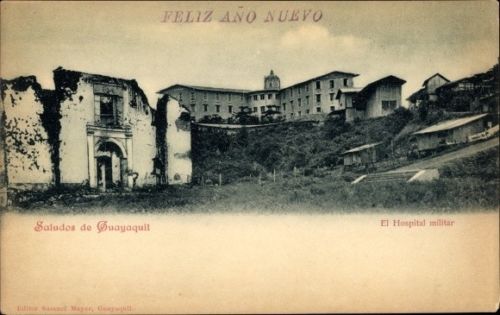
(Templo de Santo Domingo en la Plaza Colón luego del incendio grande, también se aprecia el hospital Militar que tampoco existe - Temple of Santo Domingo in Plaza Colón after the big fire, you can also see the Military hospital that does not exist either, Guayaquil 1896)

Difícil superar todo tu adiós
y renunciar a aquello que se siente,
salen tonos amargos de mi voz
y mi vida parece estar ausente.

Una faz de mi mundo se oscurece
pues mis ojos no alcanzan tu fulgor
el vacío de mi alma crece y crece
sólo soy un puñado de dolor.

Difícil pues mi mente no te olvida;
mi corazón sólo por ti palpita
sin cariño su muerte es parecida
a la de un tulipán que se marchita.

Mientras tú con mis sueños más te alejas
y pensar que comía de tus manos
vacilando en tinieblas hoy me dejas
sin gozar de tus encantos sobrehumanos.

Porque vuelvas le ruego siempre a Dios
pues para este suplicio no hay salida
difícil superar todo tu adiós
difícil pues mi mente no te olvida.

Hard to overcome all your goodbye
(Pintura del artista surcoreano J. Won Han)
and give up what it feels,
bitter tones come out of my voice
and my life seems to be absent.

A face of my world darkens
because my eyes don't reach your glow,
the emptiness of my soul grows and grows—
I'm just a handful of pain.

Difficult, for my mind does not forget you;
my heart only beats for you,
without love its death is similar
to that of a tulip that withers.

While you with my dreams drift away,
and to think I ate from your hands,
hesitating in darkness today you leave me
without enjoying your superhuman charms.

For your return I always pray to God,
for this torment has no way out;
hard to overcome all your goodbye,
hard, for my mind does not forget you.

jueves, 23 de junio de 1988

¿Para qué insisties... - Why do you insist...?


(Panoramic view of Cuenca 1943 taken from La Chorrera Avenue)
¿Para qué insistes en un imposible
corazón? Sabes que no puedo odiar...
si puede haber quien sienta tan terrible
de entre nubes naciste para amar.

(Mirador de Turi, Cuenca 2010)
Sí, naciste corazón de entre nubes;
cada mañana hacia ellas subes, subes,
juegas con ellas, mas luego, con calma
observas cómo se envejece mi alma,
le das joyas, le cantas alguna canción
precisa para cualquier ocasión
y tomas las tardes de su cintura
o anocheces en alguna aventura.

¿Para qué insistes en una locura
corazón?; sabes, no puedo olvidar
a su amor, su sonrisa, su figura
nacida de entre rosas para amar.

Y creciste corazón entre rosas,
aprendiste caricias cariñosas
que de rojo te fueron a pintar
sin que espinas te lleguen a tocar
para que nunca estés triste, sombrío;
dilúyete en el alegre rocío
que cae de este hermoso vegetal
y por favor, no cambies para mal.

Why do you insist on an impossible
heart? You know I cannot hate...
(Pintura del artista surcoreano J. Won Han)
if there is one who feels so wretched,
from clouds you were born to love.

Yes, heart, you were born from clouds;
each morning you rise, rise,
you play among them, then calmly
watch how my soul grows old,
you give it jewels, you sing a song
perfect for any occasion,
you take the afternoons by the waist,
or vanish into some adventure at night.

Why do you insist on madness,
heart? You know I cannot forget
her love, her smile, her form,
born from among roses to love.

And you grew, heart, among roses,
you learned affectionate caresses
that painted you in red,
without thorns ever reaching to touch you,
so you would never be sad or dim.
Dissolve yourself in the merry dew
that falls from this beautiful plant—
and please, do not change for the worse.